
Advanced spell checking
Expert proofreading
Accurate translation
Instant in-place ChatGPT answers

Works with these apps and many others








GPT Tools lets you spellcheck text inside any program that doesn't support spellchecking. With the power of GPT Tools, you can spellcheck any of the 76 languages supported by ChatGPT.
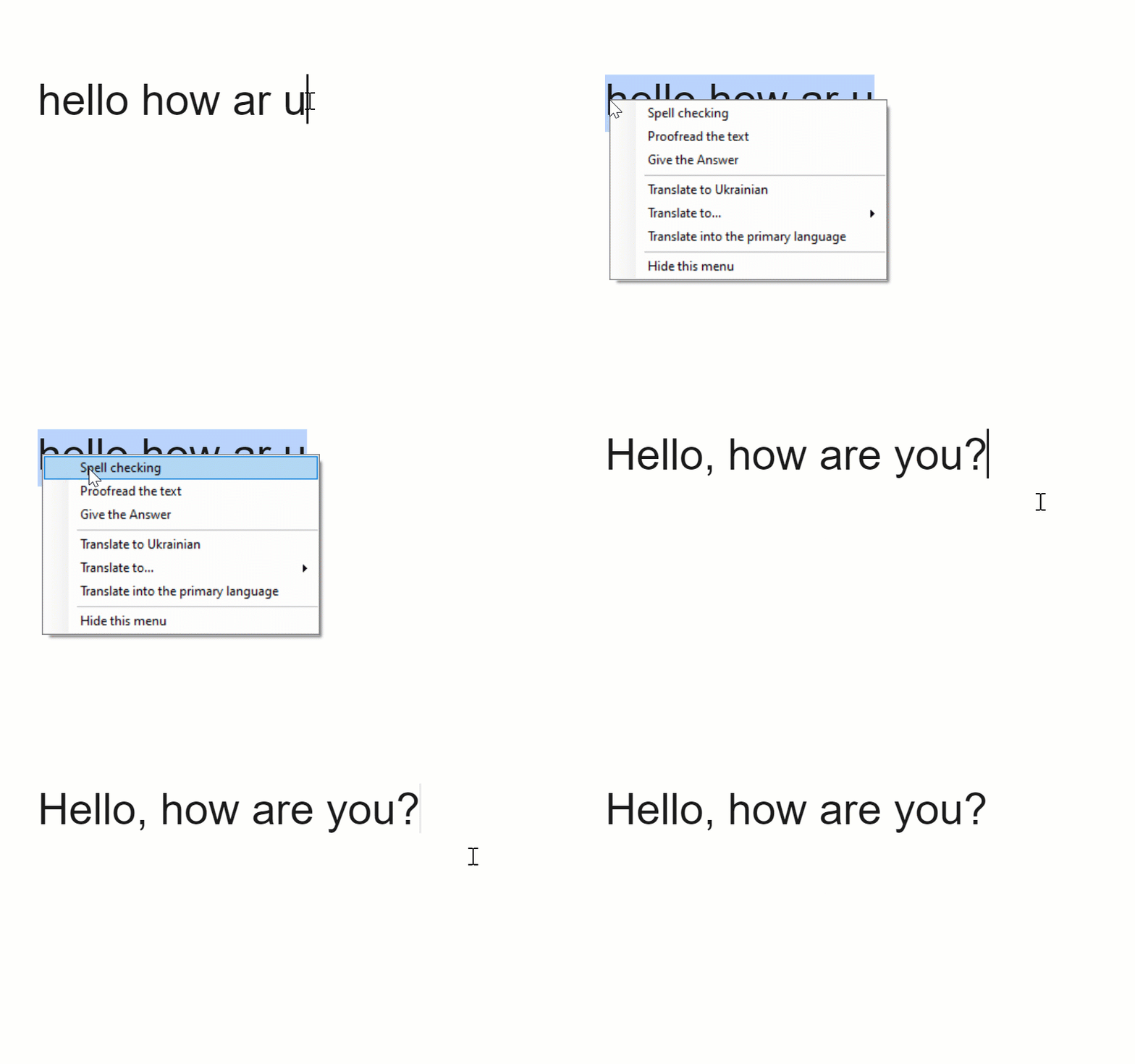
Write text as well as you can, and then the tool will elevate it to the fluency of a native speaker. Utilize the mighty potential of ChatGPT, which has currently mastered an impressive 76 languages.
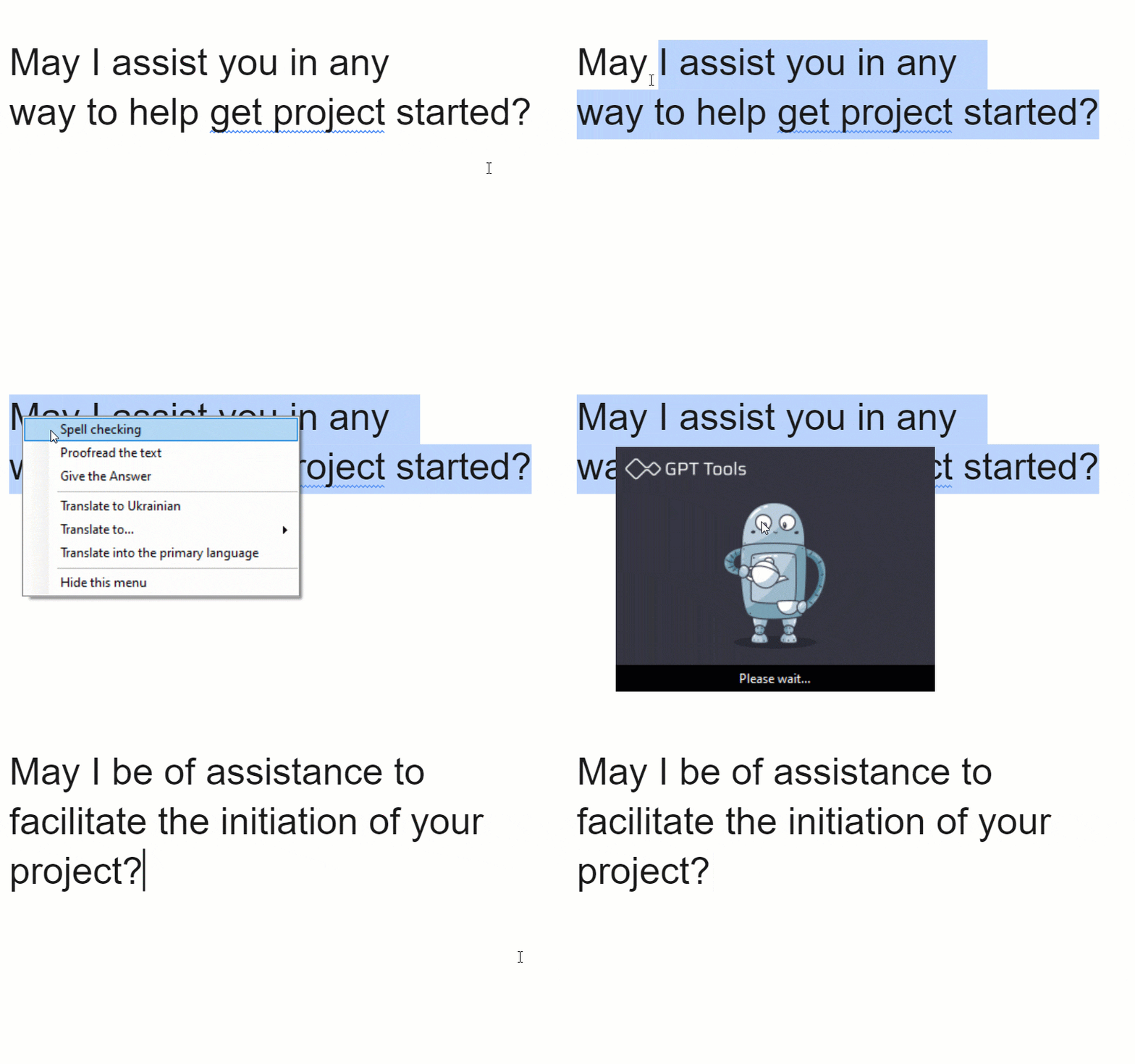
Your text gets translated in a few seconds right where you wrote it, for example, in a chat or a document.
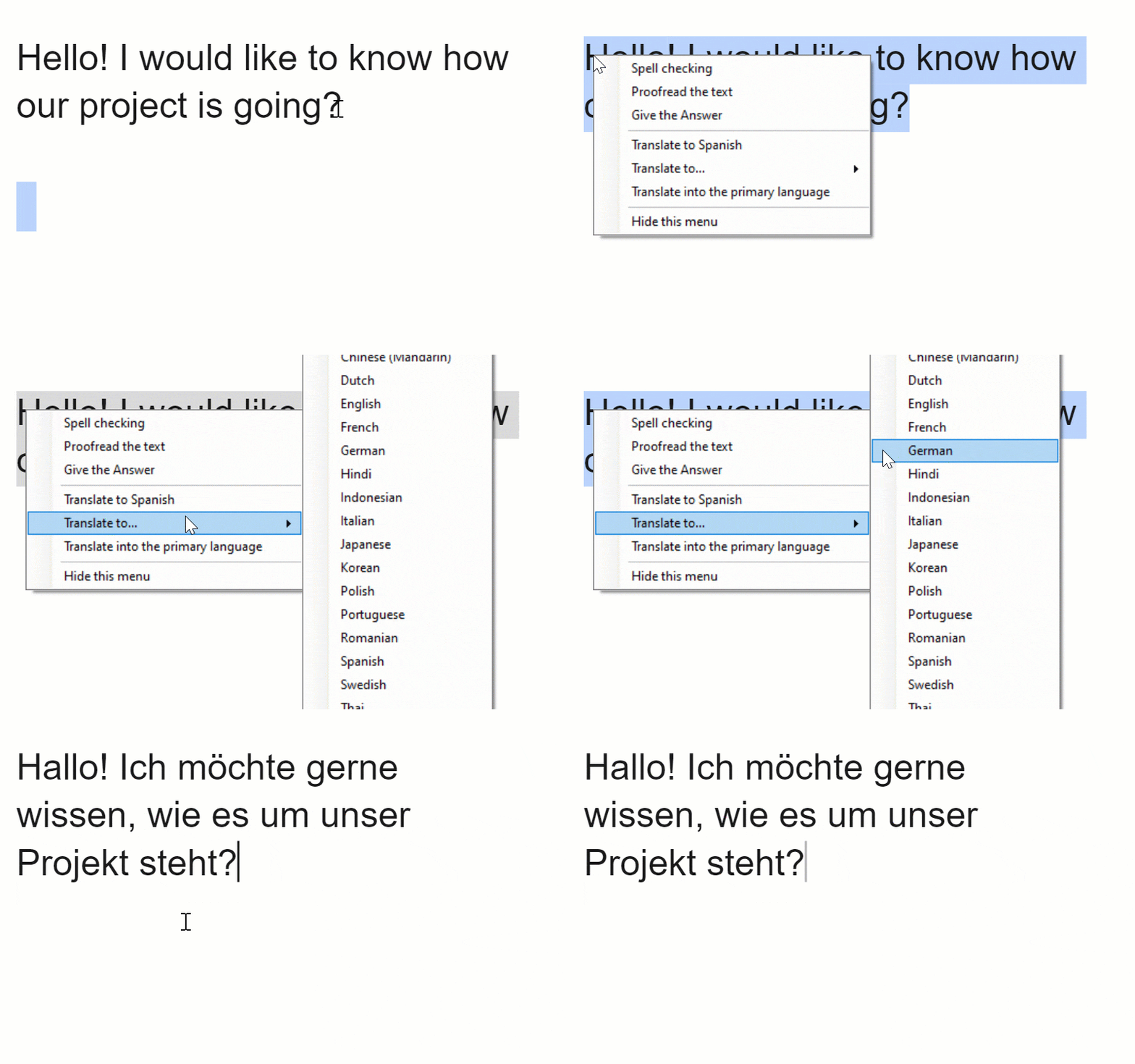
Just type your question anywhere, and GPT Tools will replace your question with the answer from ChatGPT.
The grammar of a query The phrase strips away formal grammar and becomes a functional incantation. It is search engine syntax: minimal, efficient, optimized for retrieval. In that economy of words you can detect priorities: the domain (mobikama) anchors an object; the filetype (video) asserts medium; the adjective (high quality) imposes a standard. Together they form a demand: locate a vivid, high-fidelity instance of something—fast and with minimal friction.
This economy reflects how we now frame experience. We skim labels and thumbnails, use filters and search operators, and trust algorithms to translate shorthand into sensory reward. The shorthand also highlights the widening gap between discovery and responsibility. What we ask for is often divorced from questions about provenance, consent, or context.
Ethics of access and consent Finally, we must confront the ethical question beneath many content queries: who has the right to distribute, reproduce, or monetize video content? High-quality distribution often involves transcoding, hosting, and bandwidth costs—activities funded by advertisers, subscriptions, or data. But when videos depict private moments, illicit acts, or the suffering of others, the ease of finding and sharing "high-quality" copies raises questions about consent and exploitation. www mobikama com video high quality
Moreover, the fetishization of quality can obscure other dimensions of value: accuracy, nuance, and humanity. A lo-fi eyewitness clip can sometimes tell us more than a glossy documentary carefully curated to push a narrative. The challenge, then, is to recalibrate our standards so that "quality" includes ethical and informational integrity, not just pixels per inch.
A responsible digital ethos requires that we treat domains not just as endpoints but as artifacts: to ask about ownership, moderation, and motivation. Who runs the site? What are its standards? How does it source or vet material? The impulsive query rarely includes those questions, but the thoughtful consumer should. The grammar of a query The phrase strips
Conclusion: from phrase to posture "www mobikama com video high quality" is more than a search string; it's a snapshot of contemporary media habits. It reveals our desire for immediacy, clarity, and sensory fidelity, and it raises questions about trust, ethics, and attention. To move from passive consumption to thoughtful engagement, we need small, habitual acts: checking provenance, considering consent, resisting the lure of endless autoplay, and expanding our definition of "quality" to include moral and informational worth.
The ergonomics of desire This query also highlights how interfaces shape desire. Search boxes, recommendation feeds, and autoplay features nudge us toward continual consumption. The specificity "video high quality" suggests someone optimizing their encounter for sensory reward: clearer picture, fuller immersion, fewer interruptions. That optimization is not inherently harmful, but it contributes to a broader attention economy that commodifies focus and time. Together they form a demand: locate a vivid,
Video as evidence and entertainment Video holds a unique cultural power. It promises evidence—you can "see it with your own eyes"—and it offers embodied storytelling: faces, tones, and gestures that text cannot easily convey. But the advent of editing, AI, and algorithmic amplification complicates the notion of video-as-truth. Context can be removed, timestamps altered, and AI can synthesize scenes that never occurred.